


003
What Do We Owe The Hills

Mark
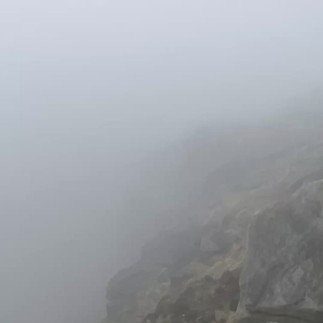
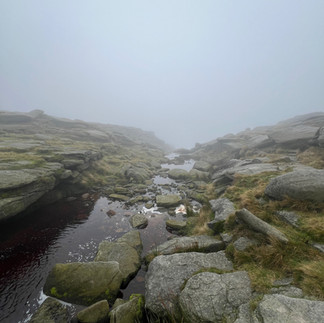
We were just setting off at the base of Kinder Scout. Pika and I, alongside my mate Dave and his dog Winnie (Pika’s best friend). We were adjusting boots, checking bags, picking up the dog’s excited poos, undertaking all the small rituals that happen before an adventure begins. It was foggy, enough to make it exciting but not enough to feel like a problem.





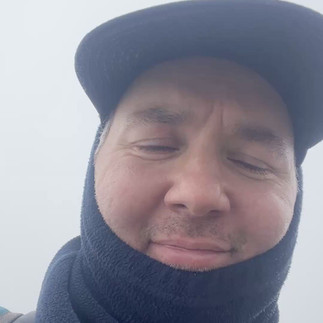


Nearby, a man was speaking into his phone loudly enough to ensure we overheard the one-sided conversation:
“They should have brought a paper map, these people never come prepared.”“They got lost because they don’t know what they’re doing up here.”“This will cost a lot of money for a rescue, they should have to pay”
I couldn’t tell if he was part of a rescue team or why he was discussing the matter. I got a feeling he was a local resident performing his own ritual. Perhaps he was just trying to make a point, to caution the tourists who ramble across ‘his backyard’. Either way, the words lingered. As we started walking, they followed us up the hill.
We’re careful walkers. We carry first aid kits, food, all weather clothing, spare batteries for our phones. We check the conditions, look over routes, make small decisions before we even leave the house. But we don’t carry paper maps, and in a way, this became a little joke along the route; “I wouldn’t have fallen if I had a paper map”, “I’m so dehydrated, if only I had a paper map”, “I could put of this fire if I had a paper map!” This led me to wonder where the line sits between being prepared and being careless and at what point does a mistake become something that needs to be paid for?
I don’t for a moment think people should be charged for rescue. The reality is however, that rescues costs time, effort, bravery and there is a more than just a financial cost of sending people out into the hills to help.
It also made me realise something else. That someone would come. That if things went wrong, if the fog thickened, or a path disappeared, or a decision turned out to be the wrong one and we found ourselves stuck, there are people willing to step into that uncertainty and find us.
The hope is of course that those volunteers don’t have to climb on our behalf. Even on familiar routes the landscape doesn’t fully belong to us. Even if we’ve climbed the most treacherous peak, it doesn’t make us masters of the land because at any moment it can shift, close in and confuse.
Perhaps that’s where the question of responsibility really begins.
In recognising the kind of places we’re stepping into and how fortunate we are to be able to step into them at all.
It made me wonder what we actually owe the hills?
This feels especially present when I think about access.
Like the Mountain Rescues Services, the right to walk freely across large parts of the countryside wasn’t always there. It was fought for, most famously during the Kinder Scout mass trespass, when walkers crossed onto private land to challenge exclusion and demand something better.
Access matters. It was fought for, and it should be protected.
What we do with that access once we have it also matters. I found myself thinking about that after a conversation with a friend, who told me, almost proudly, that after coming across a closed footpath sign for maintenance, they left the trails altogether and cut through woodland and marshland so they could continue the walk they had planned.
Part of me understood it immediately. There is something deeply appealing in the idea that access should mean freedom. That if land has been fought for, perhaps we should be able to move through it without fences, detours or permission. For a moment I found myself imagining exactly that, although, the idea didn’t settle there. It gave way to something more uneasy. I know what repeated footsteps can do.

I’ve seen what happens on popular, well worn routes like Mam Tor, where the sheer number of people passing through begins to wear the land away. And I started to wonder whether access is only half the question. The other half is what we do with it once we’re there.
That brought me back again to the same thought: what do we owe the hills?
It’s easy to think of responsibility in terms of behaviour:
Stay on the path.
Take your litter home.
Close the gate behind you.
It’s good etiquette, although I’m curious if we should consider some new mantras too?
Not everything needs to be walked on. Not every route needs to be accessed. Not every quiet space needs to be discovered.
Sometimes the more difficult choice is to turn back. Or, to stay on the path when something more interesting lies just beyond it. Because even gentle footsteps leave a mark and even a careful presence is still presence.
Perhaps we owe the hills some restraint? Some pockets of land that belong to no-one and everyone, but that are never touched at all?
That day up Kinder Scout, the fog never quite lifted. We walked, we talked, we paid attention to where we were placing our feet. Nothing dramatic happened. No rescue was needed. No decisions felt particularly significant. And yet the question stayed.
I don’t think we owe the hills perfection. I don’t think we owe them flawless preparation, or an ability to predict every possible outcome. I do think we owe them our care and something else.
Maybe that’s space. Space we choose not to step into.
28 April 2026 at 07:32:05
Walking as Philosophy, Walking with Care, Access